Ayurvedic Doctor
Last updated · Confirm dates, fees and eligibility on the official website before you apply.
Practises Ayurveda as a registered medical practitioner within that system. Wellness tourism has broadened career options.
- Route in
- Earliest entry: Undergraduate. Direct entry. 1 course lead here
- Entry pay
- ₹25,000 – ₹45,000 / monthly Any experience
- Where you work
- Ayurvedic hospitals and clinics, Government AYUSH dispensaries, Wellness resorts and spas, Ayurvedic pharmaceutical companies (Dabur
What this role is
Understand the role
Practises Ayurveda as a registered medical practitioner within that system. Wellness tourism has broadened career options.
How people get in
Getting in
Earliest entry point. Undergraduate level.
Licence or registration. MANDATORY: registration with the relevant State AYUSH / Board of Indian Medicine register.
Where people work
Outlook
Ayurvedic hospitals and clinics, Government AYUSH dispensaries, Wellness resorts and spas, Ayurvedic pharmaceutical companies (Dabur.
Indicative starting salary
Understand the role
25,000 - 45,000 per month at entry level.
This is an indicative range, not a quote. Actual pay varies with employer, city, sector and the specific role.
What you actually do
Day to day
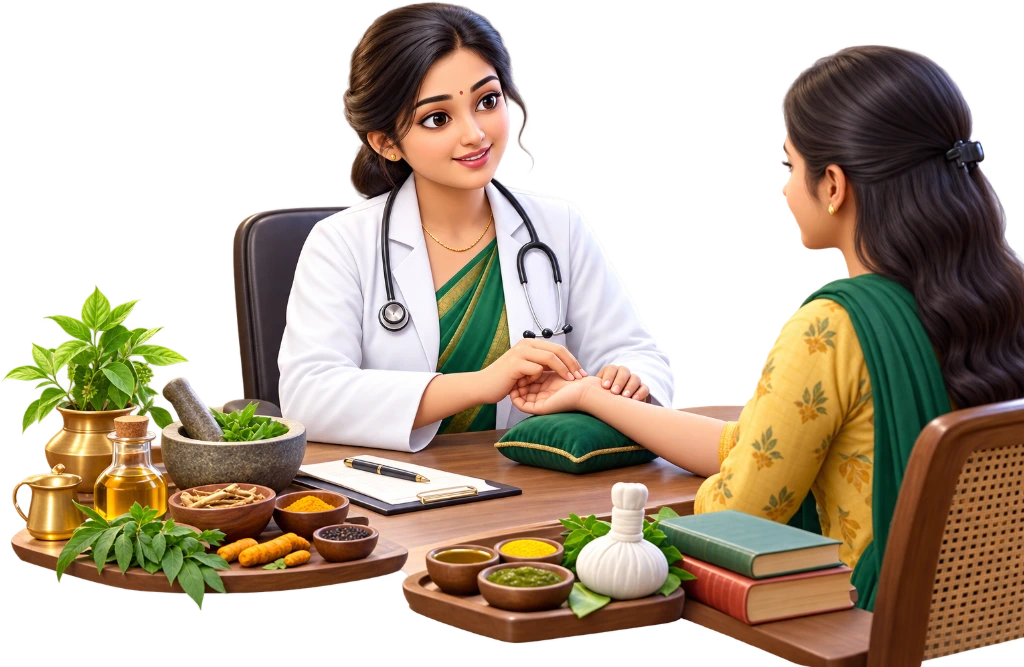
You examine patients through Ayurvedic principles, make a treatment plan, and follow up to see if it is helping.
- Ask about the patient’s symptoms, food habits, sleep, work routine and past treatment.
- Examine the patient and record findings before deciding an Ayurvedic diagnosis.
- Prepare a treatment plan that may include medicines, diet changes, daily routine advice or therapies.
- Explain when and how to take prescribed medicines, and what symptoms need an earlier review.
- Write case notes, prescriptions and follow-up dates for each patient.
- Review pain, digestion, sleep, skin symptoms or other concerns at follow-up visits.
- Change the medicine, dose, diet advice or therapy schedule when the patient’s condition requires it.
- Monitor patients receiving therapies such as Panchakarma and record their response.
- Refer a patient for tests, specialist care or urgent medical attention when the case needs it.
- Discuss treatment schedules and patient precautions with therapists and clinic staff.
- Check medicine stock, expiry dates and items needed for planned treatment courses.
- Speak with families when they need help following diet, medicine or therapy instructions at home.
- Update patient records and review cases that have not improved as expected.
- See walk-in patients and maintain registers in a government AYUSH dispensary.
- Coordinate inpatient treatment and discharge advice in an Ayurvedic hospital.
- Assess wellness guests and set safe therapy plans in a resort or spa.
- Support product information, clinical documentation or practitioner training in an Ayurvedic pharmaceutical company.
The part people are surprised by. The part that takes more time than many students expect is listening closely, writing records and getting patients to follow diet and routine advice between visits.
Who this suits
Fit
This work suits you if you want to treat patients through Ayurveda and are prepared for the long study route, including NEET UG and BAMS.
- You find yourself asking about a patient’s sleep, meals, bowel habits, stress and daily routine, rather than looking only for a quick fix to one symptom.
- You can listen without rushing someone. Many patients will describe problems in their own words, and you will need to sort useful clinical details from a long conversation.
- You are comfortable studying Physics, Chemistry and Biology in Class 12, then putting in serious preparation for NEET UG before the 5.5-year BAMS course.
- You do not mind the repetitive parts of clinical work: writing case notes, explaining diet and routine changes again, keeping follow-up records and seeing whether a plan actually helped.
- You can speak with patients from different ages and backgrounds without sounding superior. This matters in a government AYUSH dispensary, a clinic or a wellness setting alike.
- This is probably not for you if you want a short course with no entrance exam, or if you dislike patient contact and long-term follow-up.
- You prefer working within the Ayurvedic medical system and are willing to register with your State Board of Indian Medicine before practising.
Skills that actually matter
Capability
You need sound clinical judgement, careful patient care and clear communication, because Ayurveda consultations often depend on a detailed history and follow-up.
You must connect symptoms, medical history, examination findings and Ayurvedic assessment before choosing a treatment plan or deciding that the patient needs another form of care.
How to build it. During BAMS clinical postings, write a short case sheet for each patient you observe: symptoms, history, findings, your working diagnosis and why. Discuss it with the supervising doctor, then compare your notes at follow-up.
Patients need safe, respectful care from the first consultation through medicines, diet advice, therapies and follow-up. Small details matter, such as checking whether they understood the dose and when to return.
How to build it. Use your internship postings to practise taking a full history, explaining a prescription in plain language and giving a patient written diet or follow-up instructions. Ask your supervisor to watch one consultation and point out gaps.
Many patients describe pain, sleep, digestion or stress in everyday words. You need to listen without rushing, ask useful follow-up questions and explain limits of treatment without making false promises.
How to build it. Practise explaining one common condition and its treatment plan to a family member in their preferred language. Keep it to two minutes, avoid medical jargon, and ask them to repeat the instructions back to you.
People often come after a long illness or after trying several treatments. Treat their worries seriously, but do not let sympathy turn into unsafe advice, overpromising or poor boundaries.
How to build it. After difficult patient interactions in internship, note what the person was worried about, what you said and what you would say differently. Learn from senior doctors who stay kind while setting clear limits.
You need a firm grasp of Ayurvedic principles, medicines, diet advice and therapeutic procedures, along with their appropriate use for the patient in front of you.
How to build it. Link textbook learning to real cases during BAMS. Make condition-wise notes with symptoms, assessment, treatment choices, contraindications and follow-up points, then revise them before each clinical posting.
A clear record of history, medicines, advice, consent and progress helps you track whether treatment is working and makes handovers safer in a clinic or hospital.
How to build it. Ask to prepare case records during internship and get them checked. Use a fixed template for history, examination, assessment, prescription, diet advice and review date so you do not miss basics.
You will work with nurses, therapists, pharmacists and other doctors. You also need to recognise warning signs and arrange timely referral rather than trying to manage every case alone.
How to build it. During postings, attend ward rounds and observe how referrals are written. For each case, ask your supervisor what signs would need urgent referral and record the answer in your notes.
What separates the well paid from the average. The doctors who progress faster earn patient trust through careful follow-up, honest limits and records that show whether the treatment is actually helping.
The honest part
Read this one
The hard part is earning patient trust slowly. In a clinic or dispensary, you need to listen well, examine carefully, explain diet and treatment plans in plain language, and keep records. Some patients expect quick relief or compare every prescription with online advice. Government posts may involve transfers and paperwork. Private clinics often mean long hours at first, especially if you are building your own practice.
Your first two years after BAMS and State Board registration are usually about seeing common cases, learning from senior doctors, and becoming confident with clinical judgement. Income and patient flow can be uneven in a new clinic. Many doctors later choose steadier salaried work in Ayurvedic hospitals, government AYUSH dispensaries, wellness resorts or spas. Some move into Ayurvedic pharmaceutical companies when they prefer product, documentation or office-based work over daily patient consultations.
What people get wrong
Read this one
Ayurveda practice needs the same steady patient work, clinical judgement and formal training that many people expect only from other medical careers.
- “You can become an Ayurvedic doctor after a short wellness course.” No. The usual direct route is Class 12 with Physics, Chemistry and Biology, NEET UG, then a 5.5-year BAMS including internship and State Board registration.
- “An Ayurvedic doctor only gives herbs for minor problems.” Treatment involves taking a patient history, examining them, deciding a plan, explaining diet and routines, and following up when symptoms do not improve.
- “The job is all about yoga retreats and spa treatments.” Wellness resorts are one option, but many doctors work in Ayurvedic hospitals, clinics and government AYUSH dispensaries, where appointments and records fill much of the day.
- “There are no career options beyond opening a private clinic.” You can work in government services, Ayurvedic hospitals, pharmaceutical companies, or take an MD in Ayurveda after BAMS for further study and practice options.
- “Ayurveda is a dead-end career with only low-paid work.” Early pay varies, but the page's 2026 indicative band is ₹25,000 to ₹45,000 a month; experience, postgraduate study, location and the kind of employer affect what you earn.
Working reality
Read this one
Job availability scores lowest because you need BAMS, NEET UG and State Board registration before you can practise, and early posts are limited in some districts.
The route in, step by step
5 steps from where you are now.
Class 12 with Physics, Chemistry and Biology Required
Same science base as MBBS, and the same entrance paper.
Clear NEET UG Required
BAMS admission runs through NEET UG on the common merit list. There is no separate AYUSH entrance.
BAMS, including the internship year Required
Four and a half years of study plus a one-year rotating internship. Check the college is recognised by the National Commission for Indian System of Medicine before you accept a seat.
Register with your State Board of Indian Medicine Required
This is the AYUSH register, not the Medical Council one, and it is what makes you legally an Ayurvedic practitioner. Your right to prescribe modern medicines depends on state rules and varies considerably - find out where you intend to work, not in general.
Practise, or take MD in Ayurveda Optional
You can join a hospital, a wellness chain or a dispensary immediately. AIAPGET is the entrance for MD or MS in Ayurveda, three years, and it is what most practitioners who intend to specialise or teach go on to do.
Courses that lead here
1 mapped route into this career.
The roles this becomes
7 lanes out of the same starting point.
What it pays
Indicative bands.
| Stage | Pay band | What changes |
|---|---|---|
| Any experience | ₹25,000 – ₹45,000 / monthly | Varies by employer |
These are ranges, not offers. Pay varies by city, employer size, sector and your own skill more than by job title. Treat the band as the shape of the market, not as a number you can hold anyone to.
Common questions
The ones people actually ask about this work.
What qualification do you need to become a Ayurvedic Doctor?
The earliest entry point is undergraduate level.
Where does a Ayurvedic Doctor usually work?
Ayurvedic hospitals and clinics, Government AYUSH dispensaries, Wellness resorts and spas, Ayurvedic pharmaceutical companies (Dabur.
What does a Ayurvedic Doctor earn to start?
25,000 - 45,000 per month is a typical entry-level range. Pay varies with employer, city and sector.
Does a Ayurvedic Doctor need a licence or registration?
MANDATORY: registration with the relevant State AYUSH / Board of Indian Medicine register.
Test this against your own priorities
Pay, hours and entry route matter differently to different people. Compare this against the alternative you are actually weighing, rather than against the average.