
Certificate in Beekeeping (Apiculture)
Last updated · Confirm dates, fees and eligibility on the official website before you apply.
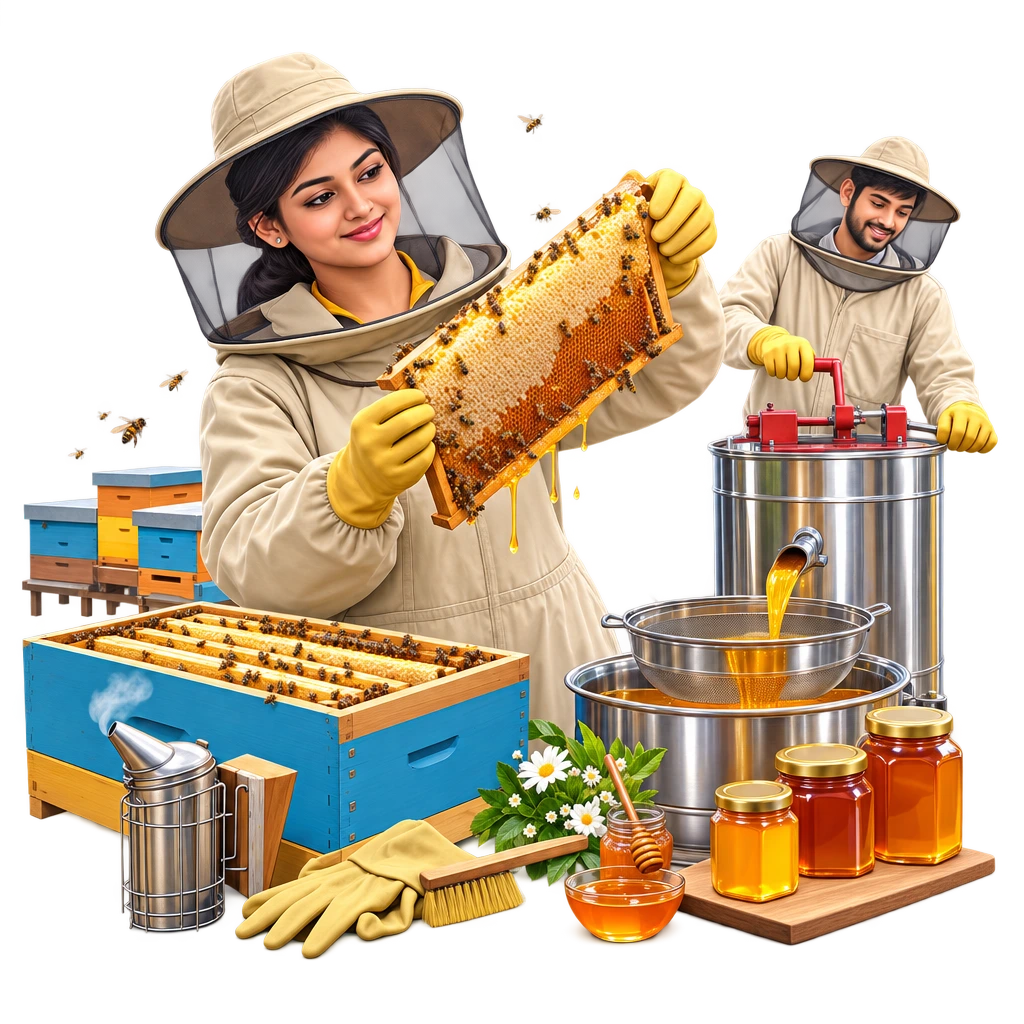
Hive management, honey extraction and processing. Supported by National Beekeeping and Honey Mission subsidies and well-suited as a supplementary income enterprise for farming households.
- Duration
- 0.1–0.5 years
- Entry after
- Class 8and 1 other route
- Indicative fee
- ₹5,000 – ₹60,000total, varies by institution
- Entrance exam
- None
- Study mode
- OnCampus
- Licence
- Not required
Course overview
Hive management, honey extraction and processing. Supported by National Beekeeping and Honey Mission subsidies and well-suited as a supplementary income enterprise for farming households.
Eligibility and admission
Who can apply. 8th or 10th pass; no formal barrier at most KVKs.
How you get in. Direct enrolment (KVKs, National Bee Board, state horticulture departments).
How it is studied. Full-time or part-time; many providers offer online or blended delivery.
Admission rules change every year. Confirm eligibility, the entrance test and the calendar against the current official notification.
Where this can lead
Where people work.
- Own apiary enterprise
- Honey processing and FPO units
- Horticulture departments
- Agri cooperatives
What you can study next.
- Advanced apiculture training
- Food processing certification
- Diploma in Horticulture
Cost, duration and indicative earnings
Indicative total course fee. About 5,000 - 60,000 total; varies widely by provider and duration.
Indicative starting salary. 8,000 - 20,000 per month.
Typical duration. 1 - 6 months.
Fees and salaries here are indicative ranges, not quotes. Confirm the current fee with the institution and treat the salary as a starting range that varies by employer and location.
What you learn
Over one to six months, you learn to manage hives and extract and process honey.
| Stage | Core content | Alongside it |
|---|---|---|
| Throughout | Hive management, honey extraction and honey processing. | Training may run full-time, part-time, online or in a blended format, depending on the provider. |
Ask before you enrol. How many hours will I spend handling hives and practising honey extraction, and does the centre provide live bee colonies and extraction equipment?
Who it suits
This certificate suits you if you want to learn beekeeping in 1 to 6 months and use it for farm-linked income or an apiary enterprise.
- You have passed Class 8 or Class 10 and want a short course with direct enrolment at many KVKs or horticulture department centres.
- Your family farms, grows horticulture crops, or has space and time to manage hives alongside other work.
- You want hands-on work in hive management, honey extraction and honey processing.
- You prefer a course that may fit around farm work through part-time, online or blended training, where offered.
- It does not suit you if you want a desk-based job or do not want regular work with bee colonies and honey handling.
What it will actually cost you
Budget about Rs 5,000 - 60,000 in total for this 1-6 month certificate, with the amount changing by provider and course length.
| Line item | Typical | Worth knowing |
|---|---|---|
| Course fee | Rs 5,000 - 60,000 total | This covers the recorded fee range for certificate training in beekeeping. |
Some training routes through KVKs, state horticulture departments and beekeeping programmes may offer subsidised training. Check the provider’s fee, refund rule and any available support before you enrol.
Indicative ranges, not quotations. Confirm the current fee with the institution before you pay anything.
Certifications that change what you earn
What it pays, and what changes it
In India, paid entry roles linked to this certificate usually start at ₹8,000 to ₹20,000 a month. Many learners use beekeeping as an extra farm income, so your earnings also depend on hive numbers, honey sales and local buyers.
India
Income differs between a job in a honey processing or FPO unit and running your own apiary.
| Stage | Monthly | What it depends on |
|---|---|---|
| Entry-level worker or trainee | ₹8,000–₹20,000 | You work in hive management, honey extraction, processing or an agri cooperative after the certificate. |
| Experienced apiary or processing worker | ₹20,000–₹30,000 | You have practical experience handling colonies, seasonal work and honey processing. |
| Own apiary enterprise | Varies by season and sales | You own or manage hives and sell honey or related products. Earnings depend on colony strength, yield, processing and access to buyers. |
Indicative bands for 2026, not measured salary data. What people actually earn varies by employer, state and sector.
The honest part
The certificate is short, but the fee range is wide, about ₹5,000 to ₹60,000. One to six months of training does not give you the same depth as advanced apiculture training. Starting pay linked to this route is recorded at roughly ₹8,000 to ₹20,000 a month. Treat that carefully if your family expects quick full-time income.
This route makes more sense as a supplementary income activity for a farming household than as a promise of an immediate salaried job. Support under the National Beekeeping and Honey Mission may help eligible beekeeping enterprises. You do not need a licence to practise, and entry after Class 8 or Class 10 keeps the formal entry barrier low.
People who do well learn the work beyond the certificate: regular hive management, honey extraction and processing. They look at where they will use the skill, such as an own apiary, a honey processing unit, an FPO, cooperative or horticulture department. Some also build on it with advanced apiculture training, food processing certification or a Diploma in Horticulture.
Who can apply
2 routes into this course.
| Qualification | Stream | Minimum | Subjects |
|---|---|---|---|
| Class 8 | Any | — | |
| Class 10 | Any | — |
Percentages are indicative. State directorates and individual institutes set their own cut-offs, and reserved-category relaxations differ by state.
Careers this course leads to
1 route mapped from this qualification.
A course supports eligibility and preparation. It never guarantees a particular job.
Before and after this course
What you can study next
Common questions
Who can apply for Certificate in Beekeeping (Apiculture)?
8th or 10th pass; no formal barrier at most KVKs. Admission is through Direct enrolment (KVKs, National Bee Board, state horticulture departments).
How long does Certificate in Beekeeping (Apiculture) take?
1 - 6 months. Full-time or part-time; many providers offer online or blended delivery.
What does Certificate in Beekeeping (Apiculture) cost?
About 5,000 - 60,000 total; varies widely by provider and duration. These are indicative ranges, not quotes. Confirm the current fee with the institution.
What can I study after Certificate in Beekeeping (Apiculture)?
Advanced apiculture training, Food processing certification, Diploma in Horticulture.
Turn this into a decision you can defend
Compare the route, follow where it actually leads, and keep one alternative in view before you apply.