
Certificate in Fire and Industrial Safety
Last updated · Confirm dates, fees and eligibility on the official website before you apply.
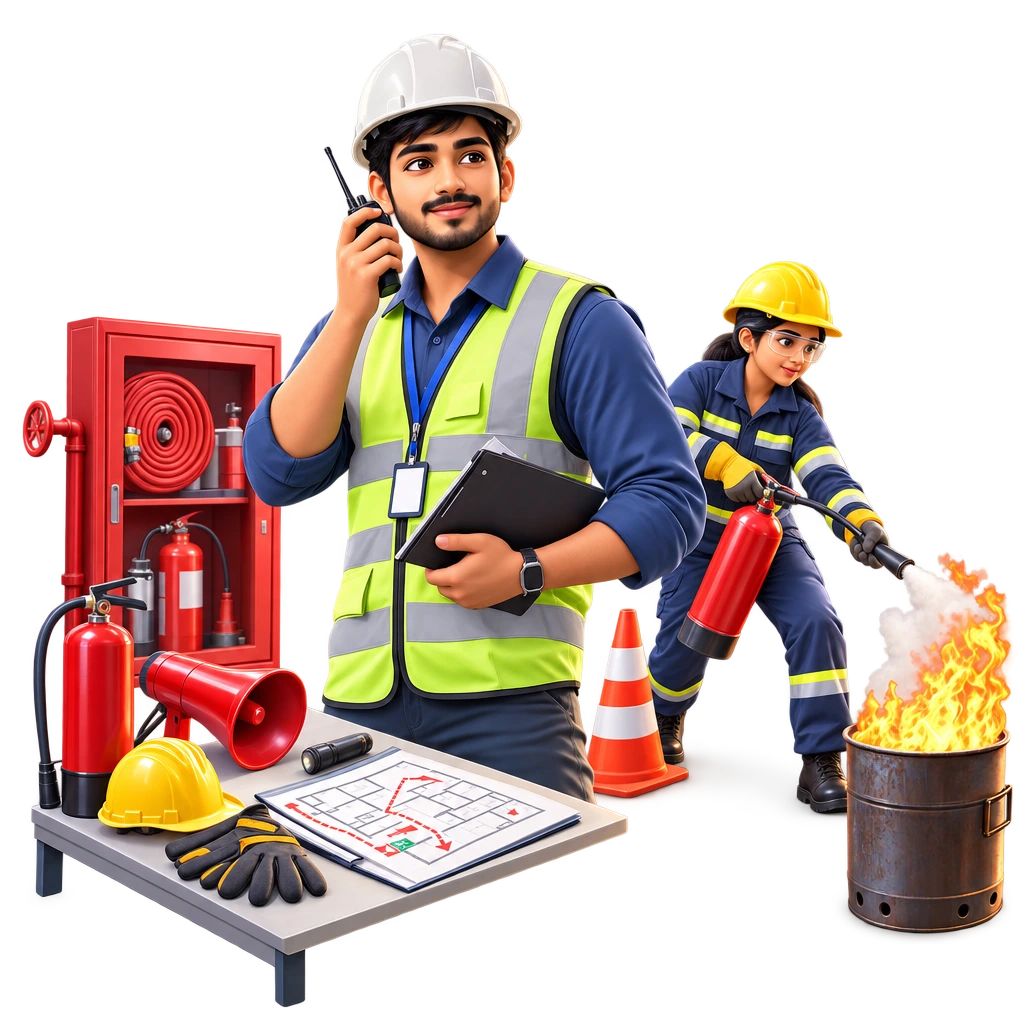
Covers fire prevention, firefighting equipment, hazard identification and emergency response. NEBOSH or IOSH certification on top substantially improves salary and Gulf placement prospects.
- Duration
- 0.5–1 years
- Entry after
- Class 10and 1 other route
- Indicative fee
- ₹5,000 – ₹60,000total, varies by institution
- Entrance exam
- None
- Study mode
- OnCampus
- Licence
- Not required
Course overview
Covers fire prevention, firefighting equipment, hazard identification and emergency response. NEBOSH or IOSH certification on top substantially improves salary and Gulf placement prospects.
Eligibility and admission
Who can apply. 10th or 12th pass; physical fitness standards may apply.
How you get in. Direct admission (private safety institutes, state fire academies).
How it is studied. Full-time or part-time; many providers offer online or blended delivery.
Admission rules change every year. Confirm eligibility, the entrance test and the calendar against the current official notification.
Where this can lead
Where people work.
- Manufacturing plants
- Construction sites
- Oil and gas facilities
- Malls and high-rise buildings
- Airports
- Gulf employment
What you can study next.
- Diploma in Fire and Safety
- ADIS (Advanced Diploma in Industrial Safety)
- NEBOSH IGC
- IOSH
Cost, duration and indicative earnings
Indicative total course fee. About 5,000 - 60,000 total; varies widely by provider and duration.
Indicative starting salary. 13,000 - 25,000 per month.
Typical duration. 6 months - 1 year.
Fees and salaries here are indicative ranges, not quotes. Confirm the current fee with the institution and treat the salary as a starting range that varies by employer and location.
What you learn
Over 6 to 12 months, you learn to prevent fires, identify workplace hazards and respond during an emergency.
| Stage | Core content | Alongside it |
|---|---|---|
| Throughout | Fire prevention, firefighting equipment, hazard identification and emergency response. | Physical fitness standards may apply. |
Ask before you enrol. How many hours will I practise using firefighting equipment and take part in emergency-response drills?
Who it suits
This course suits you if you want an entry-level safety role in factories, construction sites, malls, airports or oil and gas facilities.
- You have passed Class 10 or Class 12 and want a course that takes six to 12 months.
- You want to learn fire prevention, firefighting equipment, hazard identification and emergency response.
- You are physically fit enough to meet any standards set by the training provider or employer.
- You want to start as a Safety Supervisor or Fire Safety Officer, with starting pay commonly in the ₹13,000 to ₹25,000 a month range.
- You plan to add NEBOSH IGC or IOSH later, especially if you are considering Gulf jobs.
- This course does not suit you if you want a desk-only job with no site inspections, emergency procedures or safety duties.
What it will actually cost you
For this 6 to 12 month certificate, budget about Rs 5,000 - 60,000 in total, with the amount mainly depending on the training provider and course length.
| Line item | Typical | Worth knowing |
|---|---|---|
| Course fee | Rs 5,000 - 60,000 total | Fees vary widely between private safety institutes and state fire academies. |
Ask the institute before admission about reserved-category fee concessions, scholarships, any stipend, and refund rules. Get the refund policy in writing before you pay.
Indicative ranges, not quotations. Confirm the current fee with the institution before you pay anything.
Certifications that change what you earn
NEBOSH and IOSH certificates add recognised safety credentials after this course. They are especially useful for better-paid safety roles and Gulf job applications.
| Certification | What it proves | What it changes |
|---|---|---|
| NEBOSH International General Certificate (IGC) | You understand workplace health and safety management, hazard control and risk assessment. | Improves salary prospects and strengthens applications for Gulf safety jobs. |
| IOSH certification | You have completed recognised training in workplace safety responsibilities and safe working practices. | Improves salary prospects and supports entry into safety supervision roles, including Gulf placements. |
What it pays, and what changes it
In India, entry-level safety and fire roles usually start at ₹13,000 to ₹25,000 a month. NEBOSH or IOSH helps you move into better-paid industrial and Gulf roles.
India
Pay is higher in construction, manufacturing, oil and gas, airports, and large commercial sites.
| Stage | Monthly | What it depends on |
|---|---|---|
| Entry-level Safety Supervisor or Fire Safety Officer | ₹13,000–₹25,000 | After the certificate course, usually in a site-based junior role. |
| Safety staff with site experience | ₹25,000–₹40,000 | Experience handling inspections, firefighting equipment checks, hazard reporting and emergency drills. |
| Industrial safety role | ₹40,000–₹60,000 | Work experience in a higher-risk sector such as manufacturing, construction or oil and gas. NEBOSH or IOSH improves prospects. |
Gulf / overseas
Gulf work is a common route in construction, oil and gas, industrial plants and large building projects.
| Stage | Monthly | What it depends on |
|---|---|---|
| Entry-level overseas safety role | ₹25,000–₹45,000 | A relevant vacancy, physical fitness where required, and employer selection. NEBOSH or IOSH improves placement prospects. |
| Experienced site safety role | ₹45,000–₹70,000 | Site experience plus NEBOSH or IOSH, especially for construction, industrial or oil and gas work. |
| Higher-responsibility industrial safety role | ₹70,000–₹1,00,000 | Several years of relevant experience and stronger safety certification. Pay depends heavily on country, employer and project. |
Indicative bands for 2026, not measured salary data. What people actually earn varies by employer, state and sector.
The honest part
A certificate alone does not remove the hard parts of safety work. Some providers ask for physical fitness standards. Fees range from about ₹5,000 to ₹60,000, so check what training, equipment practice and certificate you actually receive. Starting pay linked to this route is often around ₹13,000 to ₹25,000 a month. NEBOSH or IOSH sits on top of the certificate, which means extra study and expense.
The route has a clear use if you want an entry point after Class 10 or 12. Manufacturing plants, construction sites, malls, high-rise buildings, airports, and oil and gas facilities need people who understand fire prevention, hazard identification and emergency response. You do not need a licence to practise. A six to twelve month course also lets you test this line of work before committing to a longer diploma.
People who progress usually build beyond the first certificate. They learn to inspect extinguishers and fire equipment carefully, spot hazards on site, and follow emergency procedures without cutting corners. Many add NEBOSH IGC, IOSH, ADIS or a diploma in fire and safety. They also choose training with real practice, rather than relying only on online notes.
Who can apply
2 routes into this course.
| Qualification | Stream | Minimum | Subjects |
|---|---|---|---|
| Class 10 | Any | — | |
| Class 12 | Any | — |
Percentages are indicative. State directorates and individual institutes set their own cut-offs, and reserved-category relaxations differ by state.
Careers this course leads to
2 routes mapped from this qualification.
A course supports eligibility and preparation. It never guarantees a particular job.
Common questions
Who can apply for Certificate in Fire and Industrial Safety?
10th or 12th pass; physical fitness standards may apply. Admission is through Direct admission (private safety institutes, state fire academies).
How long does Certificate in Fire and Industrial Safety take?
6 months - 1 year. Full-time or part-time; many providers offer online or blended delivery.
What does Certificate in Fire and Industrial Safety cost?
About 5,000 - 60,000 total; varies widely by provider and duration. These are indicative ranges, not quotes. Confirm the current fee with the institution.
What can I study after Certificate in Fire and Industrial Safety?
Diploma in Fire and Safety, ADIS (Advanced Diploma in Industrial Safety), NEBOSH IGC, IOSH.
Turn this into a decision you can defend
Compare the route, follow where it actually leads, and keep one alternative in view before you apply.