Certificate in Dairy Farming
Last updated · Confirm dates, fees and eligibility on the official website before you apply.
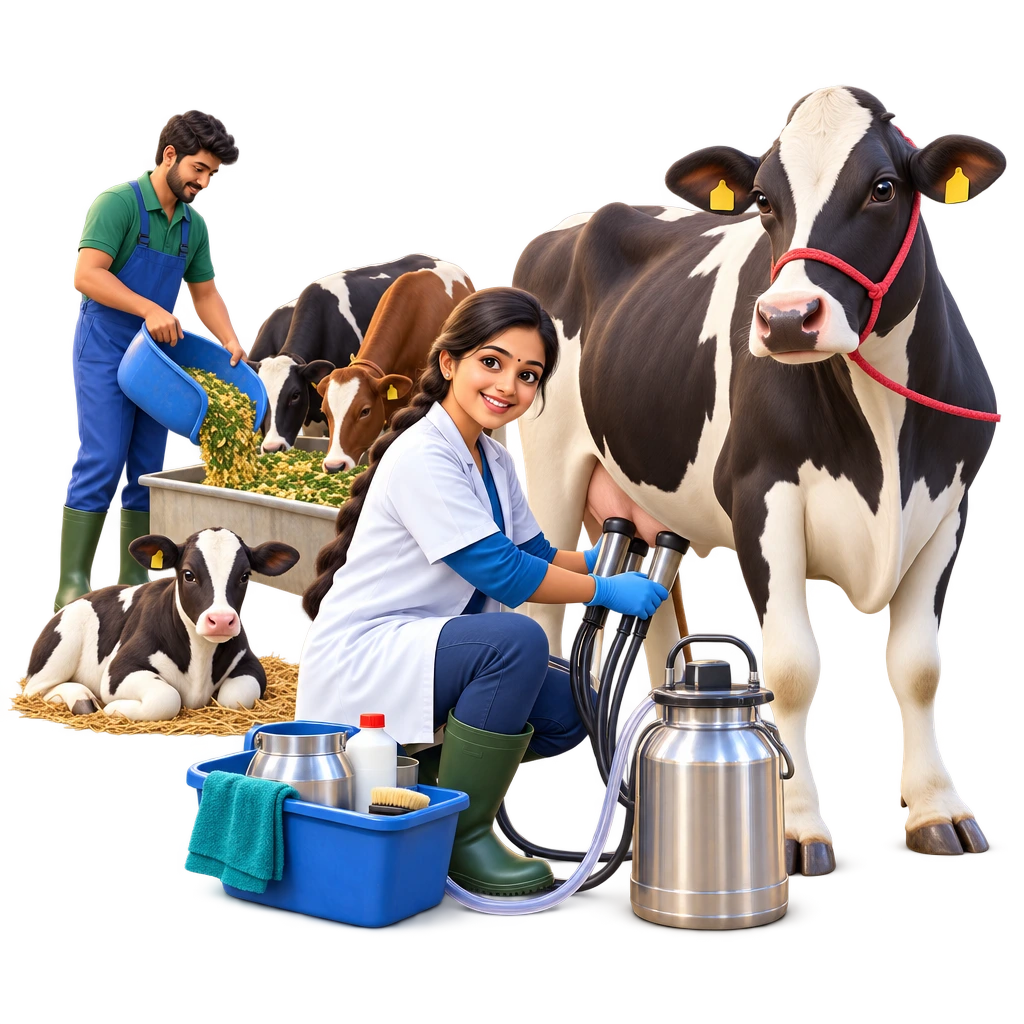
Animal selection, feeding, milking hygiene and herd health. Backed by dairy entrepreneurship development subsidies and a strong cooperative procurement network.
- Duration
- 0.1–0.5 years
- Entry after
- Class 8and 1 other route
- Indicative fee
- ₹5,000 – ₹60,000total, varies by institution
- Entrance exam
- None
- Study mode
- OnCampus
- Licence
- Not required
Course overview
Animal selection, feeding, milking hygiene and herd health. Backed by dairy entrepreneurship development subsidies and a strong cooperative procurement network.
Eligibility and admission
Who can apply. 8th or 10th pass.
How you get in. Direct enrolment (KVKs, NDDB and state dairy federations).
How it is studied. Full-time or part-time; many providers offer online or blended delivery.
Admission rules change every year. Confirm eligibility, the entrance test and the calendar against the current official notification.
Where this can lead
Where people work.
- Own dairy enterprise
- Dairy cooperatives (Amul, state federations)
- Milk processing plants
- Animal husbandry departments
What you can study next.
- Diploma in Dairy Technology
- B.Tech Dairy Technology
- Livestock management certification
Cost, duration and indicative earnings
Indicative total course fee. About 5,000 - 60,000 total; varies widely by provider and duration.
Indicative starting salary. 9,000 - 20,000 per month.
Typical duration. 1 - 6 months.
Fees and salaries here are indicative ranges, not quotes. Confirm the current fee with the institution and treat the salary as a starting range that varies by employer and location.
What you learn
This 1 to 6 month certificate covers the daily work of choosing, feeding and caring for dairy animals, with safe milking practices.
| Stage | Core content | Alongside it |
|---|---|---|
| Throughout | Animal selection, feeding, milking hygiene and herd health. | Dairy entrepreneurship and how dairy cooperatives procure milk. |
Ask before you enrol. How many hours will you spend handling dairy animals and practising milking hygiene, rather than only attending classroom sessions?
Who it suits
This certificate suits you if you want short training in dairy work and plan to work on a farm, in a cooperative, or in your own small dairy enterprise.
- You have passed Class 8 or Class 10 and want to start training without waiting for a longer course.
- You want to learn animal selection, feeding, milking hygiene and basic herd health in one to six months.
- You need a course that may fit around work or family duties through part-time, online or blended study where offered.
- You plan to join a dairy cooperative, milk processing plant, animal husbandry department, or build your own dairy enterprise.
- It does not suit you if you want an engineering-level dairy qualification straight away. Consider a Diploma or B.Tech in Dairy Technology instead.
What it will actually cost you
For this 1 to 6 month certificate, budget a total course fee of Rs 5,000 - 60,000.
| Line item | Typical | Worth knowing |
|---|---|---|
| Course fee | Rs 5,000 - 60,000 total | Fees vary by provider and course duration. |
Indicative ranges, not quotations. Confirm the current fee with the institution before you pay anything.
Certifications that change what you earn
What it pays, and what changes it
In India, paid entry roles linked to this certificate usually start at ₹9,000 to ₹20,000 a month. Your income can grow through dairy cooperative work, milk processing jobs, or a better-run dairy enterprise.
India
Pay differs by state, employer, herd size and the role you take in a dairy or processing unit.
| Stage | Monthly | What it depends on |
|---|---|---|
| Entry-level dairy worker or farm assistant | ₹9,000 to ₹20,000 | You have completed the certificate and start with feeding, milking hygiene, animal care or basic farm work. |
| Experienced dairy farm worker or cooperative support role | ₹15,000 to ₹25,000 | You have hands-on experience with herd care, milk handling and daily farm records. |
| Dairy entrepreneur | ₹20,000 to ₹40,000 | You run your own dairy enterprise with regular milk procurement or local sales. |
| Established dairy entrepreneur | ₹40,000 and above | You have a larger, well-managed herd, steady buyers or cooperative procurement, and control feed and animal health costs. |
Indicative bands for 2026, not measured salary data. What people actually earn varies by employer, state and sector.
The honest part
Dairy work is daily work. Feeding, milking hygiene and herd health do not pause for weekends or festivals. This short certificate teaches basics, but it does not remove the cost of animals, feed or equipment if you start your own unit. Fees also vary widely, from about ₹5,000 to ₹60,000. Entry-level roles linked to the course may start around ₹9,000 to ₹20,000 a month.
The course suits you if you want a quick, practical start after Class 8 or 10. Direct enrolment through KVKs, NDDB and state dairy federations can make entry simpler than courses with merit lists or entrance tests. A cooperative procurement network gives many dairy farmers a route to sell milk, while entrepreneurship development subsidies may support eligible projects.
People who do well treat herd care as regular skilled work, not occasional labour. They learn to select animals carefully, follow feeding routines, keep milking clean and notice health problems early. They also use the certificate as a starting point, then build experience in a dairy, cooperative or processing plant, or move on to a Diploma or B.Tech in Dairy Technology.
Who can apply
2 routes into this course.
| Qualification | Stream | Minimum | Subjects |
|---|---|---|---|
| Class 8 | Any | — | |
| Class 10 | Any | — |
Percentages are indicative. State directorates and individual institutes set their own cut-offs, and reserved-category relaxations differ by state.
Careers this course leads to
2 routes mapped from this qualification.
A course supports eligibility and preparation. It never guarantees a particular job.
Before and after this course
What you can study next
Common questions
Who can apply for Certificate in Dairy Farming?
8th or 10th pass. Admission is through Direct enrolment (KVKs, NDDB and state dairy federations).
How long does Certificate in Dairy Farming take?
1 - 6 months. Full-time or part-time; many providers offer online or blended delivery.
What does Certificate in Dairy Farming cost?
About 5,000 - 60,000 total; varies widely by provider and duration. These are indicative ranges, not quotes. Confirm the current fee with the institution.
What can I study after Certificate in Dairy Farming?
Diploma in Dairy Technology, B.Tech Dairy Technology, Livestock management certification.
Turn this into a decision you can defend
Compare the route, follow where it actually leads, and keep one alternative in view before you apply.